Isla de Mezcala

 Spotify

 Apple Podcasts

 Castro

 RSS Feed
Where there is history, there are hauntings! In this episode, Ayden recounts the four-year battle for independence led by fishermen and farmers on a small but mighty island!
Want to hear your story on Susto? Fill out the Letters From the Beyond form or visit SustoPodcast.com to be shared on the show!
Access bonus content and become a Patron here!
0:24 Hey, girlfriend, it's me Adrian or Aiden. Either way, I am still your host and you are still listening to SOUSTOL, the podcast of paranormal folklore from Latin America. Welcome back, all right, let me address the giant elephant in the room. A couple things to address. Number One, Listen, I am sorry about the last episode or the lack of a last episode. This is part of a larger conversation that we're gonna have today. I'm just gonna go for it. I'm just gonna let it rip. I'm gonna rip it off like a band aid. And I hope that you all will understand that, first and foremost, SUSTO has always been an independent production. Jeff stepped in this last year to help me with writing, which has been a huge help, and yet it is still a massive undertaking to produce this show at the level that I want to produce.
1:20 Which is that gives you a peek into my brain, is that this is an independently produced show. I can do whatever I want and I somehow figure out a way to put this immense amount of pressure on myself. With that being said, I just needed the last few weeks off and it it was I hate using the word bad, but it was. It was so it was so intense, that's the word I'll use. It was so intense that I just I couldn't even bring myself to address it, to create a graphic and post online. And it's just it's been a lot, and it's not like like we're okay, we are fine, We're doing good. It's just sometimes it feels extremely overwhelming. So I thank you for your patients. If you probably didn't even notice that I was gone, and I'm glad, that's good, go about your life.
2:15 I did. I'm just letting you know I had to take a break and I just had to like disappear for a couple weeks. With that being said, there's this idea of scaling back that is going to happen right now. It's in the stars. I feel like they are speaking to me. I am scaling back. So first things first is I'm I'm breaking up the band. I am disbanding the book club. However, I will continue to share what I am reading. I will continue posting like this is what I'm reading right now, this is maybe like this is how I feel about it, this is whatever, whatever. It's just like having to keep up with everything else and then putting that on my plate was a foolish thing to do. Hey, we did it for a while. It was really fun. However, that's where we're We're putting that on let's say pause for right now because yeah again, so we're scaling back. Another part of the scaling back is I'm reverting back to audio only. Listen, I am the king of saying making an announcement and being like this great, super cool thing is happening, and then tripping over myself and being like, never mind. That's part of the conversation of like a lot happening, of taking on more than I want to.
3:30 My eyes are hungrier than my stomach, My ambition is greater than you know, what realistically is sustainable. So we are scaling things back. I'm not doing video episodes for the foreseeable future. However, there are still other perks and benefits that you can gain as a subscriber to soustalplus dot com also known as the Patreon. One of those is early in at free episodes, and when I do happen to do video content this I'm not saying there's never going to be video content ever. Again. I actually have something already recorded on video that's going to be coming out in a few weeks. That will be exclusive access on Patreon. It'll be ad free on Patreon. So yes, video content will probably continue in some form of the future.
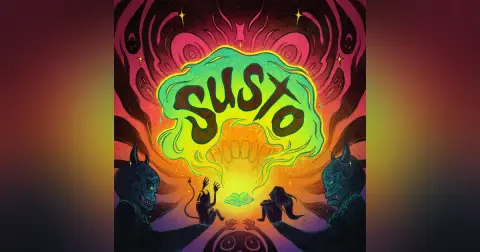
4:14 I just like it's not sustainable at this moment to do it for every single episode, so reverting to audio only, scaling things back now onto something exciting that that is, it's very sustainable. I just have to implement the change, and I don't have to. It's not going to be this huge undertaking is you may have noticed, and if you are following online that's at Sooostal Podcast on every social media platform that there is new cover art. This has been in the works for several months. I worked with an artist known as lux Fatal. You can check out lux Fatale dot card with two rs dot co and that will be linked in the description of this episode.
4:54 I will also tag her page on I will also tag her on the social media post where I post those I'm so excited for this art. Lux was amazing worked with me, was super transparent every step of the way in producing this new art. So I'm so excited. It's like the first two iterations of the Susto cover art. I designed them myself. Yet you know, I dabble in graphic design and I did the best that I could, and I had finally gotten to this point where I was like, all right, this is the next it. We need to evolve again. It's time and I commissioned an artist. I commissioned Luxe, and she did a fantastic job. Just looking at the photo now is gorgeous. It's beautiful. It's so vibrant. It feels more me. I'm like, all right, I feel like I'm like leaning into the What I feel is the character and the vibe and the aesthetic of Sustal. This feels more in line with that. So you let me know what you think. Let me know if you how much you love it, because I know you don't hate it, So let me know how much you love it, what you love about it. Make sure to check out Lux's page. And also, fun fact, I kind of like, I don't know if this counts as an Easter egg, but Lux and her husband also have a podcast called ghost Beast, and we did an episode swap with them a few months ago. They do they their their mission over at ghost Beast is to watch every single horror film and they do such fun retellings of them. It's it's in line with wikio which is
6:28 another one of my favorite podcasts, and you know that weikyoa covers all Latin American horror films. Ghost Beast they are watching, they listen, they say that they're that they're doing it. They've got a long list to watch every horror movie. So go check them out. I love their podcast, and I love the art that that lux developed for us. It's it's I can't stop looking at it. It's so beautiful. I'm so excited to share the art with you. So hopefully it didn't confuse anyone and people were like, what the hell is that? But it's pretty clear, you know the titles front center it is. It's I just I'm gushing about it. I love it so much. Anyway, we're gonna move on. Those are I think all the major announcements for the show. You can support Sustal by following along for any and all updates like the ones that I just shared here on at Sustal podcast on every social media platform, Engage wherever you were listening as well.
7:19 That's one of the easiest ways to support it's free as well by leaving positive and rating reviews, by leaving comments comments like this one from Sheila on the original Dancing with the Double episode, Sheila said, yes, I read that story in the book Stories That Must Not Die. Sheila, I'm not sure if you've caught up, if you've seen it. But I did. Well. First of all, I have that book and it is the it's the actual physical hardcover copy of the book from my elementary classroom. I talk about it all the time on here, and I have it. The sword on the cover of that book. I have it tattooed on my right forearm. I'm sure it's been on social media of course. So yeah, I love this book. I love talking about this book. It has been such a huge influence on my life and on the work that we do hear at SUSTO. So yes, I was so excited.
8:07 I get I always get excited when people are like, I know that book. I know what you're talking about because I got it. I love it, and thank you for Imy. It seems like you may be listening through the episode, so I don't know from the beginning, so I don't know when you'll get to this one, but hopefully that'll be soon, and thank you for listening. I hope that you're enjoying it so far. Daphne, however, on the other hand, on the River of Death episode, commented, wow, this has been the most upsetting episode, Daphne, Marie, just you wait. Unfortunately it gets worse in other episodes too. They continued, and they said, this was heartbreaking and infuriating. Good episode, Daphne, thank you so much. That River of Death episode was that one. It's like an ecological horror if we had to classify it, it's definitely about environmental racism and pollution and climate change, which it truly is horrifying.
8:59 It really is. We're in the think of it. It's happening. Look at what happened in Paris recently. Speaking of you know, Pride Month just ended recently, although it's Pride Year every day three six five on Super Gay however, speaking of Paris is burning, they were like burning up in Europe, which is like unprecedented temperatures. I'm not gonna go into it. If you want to hear more about ecological horror, you can listen to the Rivert of Death episode. Those two will be tied in the description below. Of course, and as always, please make sure that you send in your stories using the Submit story button on sustalpodcast dot com. It doesn't have to be just a written story. You can also send in a video, a photo, an EVP if you happen to grab one, and they will be featured either on social media or on a Letters from the Beyond episode. So again, make sure to click that button and send in your stories. And as always, as I mentioned earlier, you can sign up for exclusive and bonus content on Sustal plus dot com.
9:56 Let's get on. With today's episode. I hope that you enjoy it. We will be speaking about the Isla de Mescala. There is an island in the middle of Mexico's largest lake that has been soaked in blood for hundreds of years. The small island sits in Lake Chappella in the state of Jalisco, about twenty minutes by boat from the shore. On a clear day, you can see it from the waterfront of the town of Mescala, rising dark and quiet out of the water. The ruins of a stone fortress are still visible.
10:49 There are no permanent residents. The island has been officially abandoned for over a century and a half, but locals will tell you it's not empty. The people who live on the lake shore, the fishermen, the guides, the families who have called this region home for generations, will tell you that the island remembers everything that has ever happened on it, and what has happened on it is enough to keep the dead from resting. Long before the Spanish arrived, long before the land was called Mexico, this island was already considered sacred. The people who first claimed the island around twelve EIGHTYCEE were connected to the same civilization that built the Guacimontones, the great circular pyramids of Hallisco that still stand today, rising in perfect concentric rings from the earth.
11:47 These were sophisticated people, engineers and astronomers, and deeply spiritual, and to them this island was not simply a piece of land in a lake, a threshold, a place where the world of the living pressed up against something else. There was a structure on the island still called the Torre del Gabalero Alto, or the Tower of the High Night. It is an ancient yellow structure just visible from the water. Most recently used as a watch tower. Locals say this was a center of torture in Prehispanic times, a place where sacrificial rites were performed. The obsidian blades found buried in the soil of this island were not for cutting vegetables.
12:35 They were ritual instruments, the kind used in ceremonies where the boundary between a human life and whatever came after it was deliberately ceremonially crossed. The island was, by every account an altar blood had spilled here in the name of the divine. The lake received those offerings, and in the cosmology of the u S indigenous peoples of the region, a place that receives the dead becomes a kind of door. When the Spanish arrived in the sixteenth century, they built a Catholic chapel on the island. This was not unusual.
13:16 The strategy of the colonial church was to construct Christian buildings directly on top of indigenous sacred sites and to overwrite them, to replace one spiritual presence with another. But on this island, the chapel was built on the exact spot where sacrifices had been made to the old gods and ancestors. Their idols were thrown into the lake. Every ritual tool, every carved stone face, every figure that had been venerated for generations cast into the water. Whether or not you believe such things carry weight, it's worth considering what it means to the spirits of a place when you drown their gods. By the early eighteen hundreds, the indigenous people living along the shores of Lake Chappala had been living under Spanish colonial rule for nearly three centuries.
14:10 The cruelties imposed on them were not abstract. They were daily physical and grinding, forced labour, land seizure, violence with no consequence for those who inflicted it. In eighteen twelve, a young fisherman named in Carnacion Rosas had enough. He was not a politician or a trained soldier. He was a man who pulled fish from this lake for a living. He gathered about sixty men, fishermen, farmers, indigenous villagers, armed with lances, sticks and rocks, and initiated an uprising. The Spanish sent troops to crush the rebellion, and Carnacion Rosas and his men defeated them, killing sixty word spread and the uprising Guru, a former Catholic priest named Marcos Castellanos, a man who had already renounced his allegiance to the colonial order and joined the independence movement, arrived on the island with more insurgents. Together they did something extraordinary. They turned this small floating altar on the lake into an impenetrable fortress. They worked with remarkable ingenuity. They built defensive walls right at the waterline, just beneath the surface, invisible.
15:34 To approaching boats. They built a second set of walls at the beach's edge. A third ring of fortifications protected the interior structures. They positioned cannons on a tiny adjacent island, an outer defensive platform set just off the main shore. Spanish ships came to break the siege. They were not ordinary vessels for the lake. Some were dismantled from the ocean and reassembled peace by piece on the lake, specifically to retake this island. But then they ran aground on the submerged walls. The rebels watched them flounder from the shore and recovered weapons, canoes, and ammunition from the wreckage. For four years, a few hundred indigenous men and women held off the full military force of the Spanish colonial government.
16:31 The people in the. Lakeside villages secretly supplied the rebels at night by rowing out under the cover of darkness with food, ammunition, tools, and medicine. They knew the risk. When the Spanish discovered this network of support, their response was medieval in its brutality. They burned every crop along the shores of Lake Chappala, every field, every garden, every store of grain. They starved the rebels from the outside in. By eighteen sixteen, eight thousand Spanish troops surrounded the island. The defenders were sick and starving. Their wounds were infected.
17:13 Disease moved through the fortress, and people died. But none of them surrendered, not one. They refused every offer, every demand, every ultimatum. When the end finally. Came in November of eighteen sixteen, it came not from defeat in battle, but from the slow murder by starvation and illness. Marcos Castellanos and the Spanish commander Jose de la Cruz agreed on terms. The rebels would surrender. In exchange, they would be pardoned. They would be allowed to return to their homes freely. When the Spanish entered the island, they found sixteen cannons, stockpiles of weapons, and approximately eight hundred men barely alive. The Spanish commander, by all historical accounts, was moved.
18:08 He ordered food. Brought to the island to feed the malnourished warriors. He upheld the terms of the surrender, He let them go. Historians note that this was the first time in the entire Mexican War of Independence that the Spanish had granted a conditional surrender. This was the first time in years of exterminating and pitiless war that they had not executed their prisoners. It seemed for a moment like grace, but it was not. Jose de la Cruz was not a merciful man. He was known throughout New Spain for his cruelty and bloodthirsty methods. He had let the rebels go, but he had not forgiven them. In eighteen seventeen, one year after the surrender, he ordered a new structure built on the island. Not a monument to the brave indigenous defenders, not a memorial to what had happened here.
19:08 A prison. The message was simple and deliberate. You wan the battle, but we own this island, and if you ever think of taking it back, this is what waits for you. The fortress the rebels had built was repurposed. New construction was added of a moat, drawbridges, embrasures for weapons, and firing ranges. The structure that emerged was called El Bresilio. It was the only work of formal military architecture ever built in the territory of Jalisco. It was designed to be inescapable. It was designed, above all, to be a warning.
19:49 The prison received its first inmates in eighteen twenty six and continued operating until eighteen fifty five. The facility had four wings arranged around a central cobbleston courtyard, twenty eight cells, two circular watch towers, a drawbridge over a deep perimeter mote, so that even reaching the entrance required crossing a gap over open water, the lake visible below you on all sides. The dormitories held twenty to thirty prisoners per room, but locals who know this island's history say the dungeons were different. The deep cells could hold up to two hundred and fifty people in a single enclosure. Two hundred and fifty people in one cell on an island in a lake.
20:38 There is no kindness in that number. That is not incarceration, that is something else. The prisoners sent to Mescala were drawn from the communities along the shores of Chappala and Michua Gun, the same communities that had once supported the rebellion. They were people who had stepped out of line, who had defied the colonial order, who had committed the crime of challenging the authority of those who ruled them, the most common offense recorded in the prisons. Official documents covered a wide range of crimes against the social order, including any act perceived as a violation of the rights of the powerful. The prisoners lived in what contemporary accounts describe as extreme and repugnant conditions. There was no adequate food, no clean water, no medical care. Disease moved through the cells constantly. People died slowly of illness, of starvation, of infected wounds, of despair. Others died attempting to escape by throwing themselves from the walls into the lake, only to be pulled back or drowned. There was no appeal, There was no recourse. You were on an island. The water surrounded you on every side. The Spanish garrison held the only boats. The chapel on the island, built on the site of the old sacrificial ground, took on a new and terrible meaning. During these years, prisoners went there not
22:11 just for prayer, but for penitence, for formal physical punishment in the name of God. The most common voluntary penants performed in that chapel was a three day fast. Starving men chose to go without food for three days to demonstrate their contrition. In that context, the word voluntary deserves a long look. The chapel also served as a burial ground. People were interred there inside and around it. Beneath the stones where prayers were said. Bodies were laid into the island's soil. When Brasilio finally closed in eighteen fifty five, the island fell quiet. The Spanish military's presence dispersed. The prisoners who were there had all either been sent away or died. The island was abandoned. But here's the thing about a place where this much suffering has accumulated. The suffering does not leave just because the people do. The island has been essentially uninhabited for over one hundred and fifty years. The ruins are still there, the stone walls, the moat, the towers, the chapel with its collapsed.
23:26 Roof, the Quardo Viejo, or the old barracks. Where cannonballs were cast from molten metal during the war, its quadrangular walls still standing in their Baroque style, though crumbling now. The Tori de gaveroalto ancient and yellow, watching. The lake and the stories. Talk to the people at the pier in Mescala, the fishermen, the boat operators who carry tourists out to the island during the day and who do not linger past sunset. Ask them what they've heard, what they've seen, what their elders told them about this place. They will tell you about the sounds from the old barracks. Late at night, when the lake is still and the tourist boats have long since returned to shore. You can hear it, a knocking, rhythmic, deliberate, like something chipping stone, like someone still working. The people who live closest to the island say it has been heard for generations, always the same sound, always coming from the same ruined walls where the prisoners once broke rock and cast metal for cannons. They would eventually be killed by who is still working in those ruins alone in the dark.
24:47 They will tell you about the child. There is a child who cries on the island, not in one place, everywhere, in every corner, in every passage, through every ruined room, a child voice, weeping, never finding comfort, never stopping. No one has ever found a source for it. The locals say it is the spirit of a child who died there, and given the history of this place, the question of which child or how many is not a comfortable one to sit with. They will tell you that the cells of the old Brasilio feel different. They remain cold and empty, but there is always a sense that something else occupies the space with you. That walking through the dormitories, through the tight corridors between the ruins, you have the sensation of being watched by something that does not want you there. That the air in the cells has a quality of pressure, of presence, of accumulated anger that has nowhere to go. The island operates nighttime tours now. The local guides who lead to them have their own stories. They talk about things they have heard while walking the grounds after dark, shapes they have seen in the towers, movement when the hair rises on their arms, and they know with a certainty. They cannot entirely explain that something is aware of them. The souls of the prisoners, the legends say, have not left. They are still in
26:19 those cells, still in those corridors, still doing pennants for sins they may have not committed, still trapped on an island they could not escape in life. In one of those nighttime tours, they warn you not to stare at the walls for too long. Dark pained faces will appear on the wall between the flickering of lights, the pain of those prisoners forever trapped in the stone walls of the dungeon. And deeper, still, beneath the prison layers, beneath the colonial chapel, beneath the insurgent fortress, are the older presences, the ones who were there on the island before the Spanish arrived, before the rebellion, before the prison the ones whose idols were thoughtlessly thrown into the lake, the ones whose blood fed this soil, those who performed the rites at the Torre del Gabalo Alto, when the world was younger and the lake was a threshold between one world and another. This island has been a site of killing for seven hundred years in Mexico, people know that the dead are not entirely gone, and the world of the living and the world of the dead are not as separate as we might prefer. A place like this does not empty out. It fills layer upon lair, blood upon blood.
27:47 The lake holds it all, the island sits in the middle of it. And at night, when the last boat has gone and the water goes dark, and still something on Islamiska is still awake, knocking, weeping, waiting for what we don't know, maybe for an apology that will never come, maybe. Just to be heard.
28:36 Welcome back, well friends, thank you so much for listening to that episode. Let's go ahead and jump into our sources here first. I do want to address though there were not super concrete sources, so there was a bit of creative writing, as we do here on the show, and I just want to clarify it as to not perpetuate any sort of like stereotypes or anything. There were a few sources. That mentioned that there was in fact some form of blood letting or ritual sacrifice that happened specifically on this island and with the indigenous people that lived on what is now known as Khalisco or Mexico, right, so that that did happen. However, it did not happen at the same frequency as it did with other peoples. And I think we're going to talk about them here, but I want to say that the main indigenous group, or the main indigenous group of peoples that inhabited this area were known as the Coca people, and we will be talking about them in a source here. I just wanted to clear that up that yes, some form of blood letting, some form of ritualistic human sacrifice happened, but it was very rare, if at all, so just laying the foundation for that. Speaking of laying the foundation, our first source is from Maya Comunication dot com dot MX and this is about Mescata Island, the mysterious destination and you must visit in Khalisko. And this is sort of a condensed history of the island, and we're going to be getting
30:06 into a more thorough history, but I want to give the condensed version. So this is a very historical episode. This is very much based on true events on a real place. And this says in the heart of the imposing Lake Chappala, Mexico's largest lake lies the enigmatic Mescala Island, a destination that blends history, mystery, and authentic flavors. Though its atmosphere is steeped in legends and ghost stories, the island has become a perfect attraction for those seeking a unique family getaway, which is very interesting considering the history of this place. Right, as we just heard in the story was there was, there's war that happened here, there's death that happened here, all the way to pre Columbian times.
30:49 So bring the family right, but this continues. Mescala Island, just fifty minutes from the picturesque magic town of Ahihik, covers less than twenty hectares but holds centuries of history and secrets waiting to be discovered. Also known as Patassilio Island, it was founded in twelve eighty and became an important center of worship during the fourteenth century. So what like over eighteen hundred years ago, that's crazy. Archaeological remains found there, such as of citium points and ceramic pieces, suggest that the island may have been inhabited by the same civilization that built the famous guacies in Jalisco and I will be talking about the Gauci mones in their own source.
31:34 But as mentioned in the story, it's this kind of like pyramid structure, but the pyramid is built of like circular layers, and the ones like if you look them up now online, I'll post a picture on the social post for this episode. Is they're covered like they look like hills because they're covered by grass. I don't know if they've always been covered by grass, if they were built that way, or if that's just like nature took over, and there may be. But it also looks like from the side as if they're made from rock. So you can check out a picture of that online. And we're going to talk about those more in a second, but this continues. One of the most significant moments in the history of Islam, Mescala occurred during the Mexican War of Independence, when it became an insurgent stronghold. For four years, the rebels valiantly defended their fortification against royalist attacks. Over time, the military structure, known as Elfuerte was transformed into El Presidio, a prison for the region's most dangerous criminals. Today, Mescala Island is a destination steeped in tales of terror and legend.
32:35 It is said that the souls of former prisoners will still wander the halls and cells of the old prison. So definitely haunted, a haunted place, and as we say almost every episode, where there is history, there is haunting. Ooh, I don't think I've said it like that before, but that's really good. Where there is history, there is haunting, and a lot of history happened here, and a lot of intense history war literal war, lots of death, and then prison which are of course, as we know, just prisons, our structures of torture, and so yeah, of course there has to be this traumatic impact on this space. This continues furthermore. The island features a small cave that serves as a shrine dedicated to our Lady of San Juan de los Lagos, and a chapel built with unusual materials such as volcanic rock and animal remains, where ancient religious rituals were performed For adventure lovers, islam Uscala offers much more than history. The Old Barracks, a collection of ruins once used for weapons manufacturing, and the Tower of the Tall Night, a yellow structure that served as a torture center in pre Hispanic times are must see attractions again like Musty Attraction, torture center and all this and that.
33:45 But there are photos here from and around the island, and it does look beautiful. It's an island, right, It's hard for an island to not look beautiful, especially with the sunset in the background. But yeah, we have another source here from Wikipedia, and this is also more history about the island. So there's a lot of what we just read in the Mayako Municacion source. But I want to talk more of the Virgin of the Tree of Life and the specific structures on this island. So this one it says on Mescala Island there is a very representative sculpture of a virgin known as the Virgin of San Juan de los Lagos or the Virgin of San Juan of the Lakes, Right, that's what that's what that translates to, Yes, located under the Tree of Light, which represents with its roots and trunk, the figure of an elephant.
34:32 So yeah, it's just this big tree that is said to. Look like an elephant. I don't I think I kind of see. I think I see the one branch over on the left of this photo that looks like an elephant's trunk. But yeah, apparently this is a structure. This is a shrine to the Vehican that is on this island. And it says it is said that this Virgin Mary statue was made by the indigenous people who inhabited the island during the colonial era. The ribbons represent the colors used in the traditional clothing worn by the women of Escala for their dances. Then it talks about the chapel. It says the chapel on the Mescala Island was the original site of the Virgin of San Juan de Oslagos, where people prayed and where they performed voluntary penances. Again, the voluntary penances, which me or may not have been super voluntary, the most common being a three day fast. It is said that some people were buried there. The island's inhabitants were considered very devoted to the Vitan of San Juan delos Lagos.
35:25 Then it talks about the fort. The fort, the island's main attraction, has a drawbridge at the entrance. Since under the bridge and around the entire fort, there is a double sloped perimeter moat, so essentially it's like a moat, but it's like a v so each side is at a slope, it's at an incline. So if I guess, if people fall in, it's hard for them to climb out right, or if you go in trying to climb the wall, it's gonna be hard to get out. And then one side of it it goes like all the way up to a wall, and so it's like you really cannot climb over if you get into this moat unless you had like you know, like if from the cartoons there's like that rope with it looks like a giant. Fit show throw it over the wall. It's very loney Tune style what I'm imagining, but that sort of thing. And again the moat was installed after the not the surrender, I guess the surrender, but like you know, after that they made their agreement to end the battle. There that four year battle this continues. The fort has four wings as we mentioned, and twenty eight cells surrounding a central paved courtyard, as well as two circular watchtowers, one of which is known as San Juan Batista.
36:26 It was in this area that the prisoners were housed in dormitories that could accommodate approximately again, as we said in the story, twenty to thirty people per room, which I'm like, how okay, exactly how big were the cells? We don't see that detail here, but twenty to thirty people in one room has got to be a big room. If not, that's really like inhumane. But again, prisons, this continues. The fort also included a kitchen and punishment cells in addition to a central courtyard. Then the last structure listed here are the Old Barracks. The Old Barracks is a quadrangular building with a central courtyard which still retains wing rooms and buttresses, as well as vestiges of a staircase. There's some sort of oven in the courtyard that I think may or may not have been a part of the kitchen, and some baroque influence in the windowsills and ornamental details. So yeah, as you can imagine, it is just a very very old structure, a very old place.
37:19 With that, we're gonna go ahead and take a quick break. Welcome back. So this next source that I want to get into with you, This is a pretty lengthy one, but this was one of those where as I mentioned last time, I'm like, oh, this is a lot if you want to read it whatever, whatever. I again highly recommend checking it out reading it for yourself. But I did do a breakdown of the timeline because this goes like into a really detailed timeline of the nut the history of the island itself, but the timeline of the of the battle, the four year battle that took place here.
38:05 And this is from Chappala dot com. It's called the Battle of Mescala Island by Robert M. Burnett. And again you can find direct links to the sources on the sustol Google docs on sustoplus dot com. But we're gonna go through this timeline that I took notes on, so for the background and the uprising in eighteen twelve, as mentioned in the story in Garnacion, Rosas, which I think is a beautiful name in Garnacion, it's so cool and unique at least timmy right, But it says that in Garnacion, a fisherman from Lake Chappala recruited about sixty men and rebels against the Spanish rule. It says that his forces reinforced by insurgents under Jose Santana, which was someone who joined him defeated the Spanish troops near Mescala, killing sixty Spanish soldiers. So the Spanish got wind of this happening, of this uprising, and they were like, let's go stamp that out before it gets worse. But they were not ready for these people to put up a good fight.
39:03 So then the rebels win further battles at San Pedro, Itzikan and Bon Citlan, capturing firearms, cannons, and ammunition. So you're gonna notice in this timeline is that they're having these smallish battles throughout these four years, and each time it's kind of a success for them. Not only are they killing off the Spanish soldiers, but each time they're also acquiring goods. They're getting like loots, right, So they win further battles they end up also capturing firearms, cannons, and ammunition. It says that both Rosas and Santaana gather nearly one thousand men and fortify Mescala Island as a rebel stronghold, led spiritually and militarily by And this is exciting to read. I'm sure you heard the name the former priest, Don Marcos Castellanos. Is that my uncle that is my last name, which I don't think growing up in Texas, it's not an extremely last name. I don't.
40:00 I think I've met a ton of people with the last name Castellanos, and when I do, it's always like, hey, oh my god, well I hardly see that. I remember one time a few years ago, after I think like a five k that I ran, this guy walked out to me. He's just said, no way. He pointed out my bib y'all. I kid you not. His name was my name too, John Jacob Jingo Harbersmith. No, his name was Adrian Castellanos, And I was like, holy fu, I had registered for that run as Adrian Castillanos and we're just pointing at each other like the Spider Man meme. I was like, hold on a minute. So anyway, in these early stages, around eighteen twelve, Lomacos Castianos, who was a former priest, renounced that and maybe not renounced his Catholic belief or his Christian belief, but he renounced I guess maybe the Spanish government's actions, and like he fought, he was also fighting for the independence of Mexico, right which, so here is where the siege really begins at the end of December eighteen twelve, Spanish Governor Don Jo said la Cruz orders Lieutenant Colonel and Lenadis to attack the island.
41:04 So again, Spanish Governor don Jose de la Cruz, he's an important player in this. He's kind of calling the shots on behalf of the Spanish government and the Spanish army to try and take down the forces at Isla Mescala. Right, So at the end of December eighteen twelve he sends anhel nadus to go and battle with them. Around February eighteen thirteen is when the actual battle happens. Lenatis's assault fails disastrously and he and his men are captured and later, of course, reportedly executed. So not only did Lenatis, who was sent over by Don Jose de la Cruz, did he lose this battle, but him and his men were captured and they were executed prisoners of war. I don't know if that counts as account is a prisoner of war, but if they were executed, but they were so, then defenders of the island. They strengthen it again because each time they want a bat they just got to keep whatever they captured from those forces. So with le Natus's men they also capture seventeen cannons and weapons. Josela Carus again the guy calling the shots for the Spanish military.
42:12 This says Goruse reported the action to Viceroy Don Francisco Javier Venegas, then governor of New Spain. In part quote, when Lenadis embarked with his seven canoes, he came too close to the island and was surrounded by more than seventy canoes, and in spite of giving glorious resistance, according to him, was finally the victim of imprudent and unnecessary rashness, unnecessary rationists. Pop kettle right, This continues. I cannot please myself with thinking that any of the unfortunate officers and troops are prisoners, because I know the fierceness of those quote Indians. We saved only three canoes. Grus pleaded with Viceroy Venegas to send men to replace those lost in his first attack on the island. So again, as mentioned, their first attack, there was a RepA. He did Spanish attack and fell. In June of eighteen thirteen, Spanish Colonel Pedro Celestino Negrete leads twelve hundred troops against the island, repelled by cannon fire and rocks thrown by the defenders. Again, you could imagine that the Colonel Celestino Bedro Celestino Ningrata was sent by Don Jose de la Cruz. Again the guy calling the shots. I'm repeating this to hopefully I'll stick.
43:25 But Bedro Celestino Negreta, he leads twelve hundred men. They are repelled by canon fire and rocks. So these people were fighting like I would say, literal tooth and nail if they needed to, but they were using whatever they could at their disposal, so literally using rocks, throwing rocks at them. Negreta, disheartened and embarrassed by the failure of the campaign, asked to be relieved of command of the Spanish forces and was replaced by Jossein Navarro. So there were multiple military leaders who led fights at this island who like just could not they couldn't win. They kept losing, and this guy probably saved his own life and was like I cannot do it. He was disgraced and he was swapped out by Jossen Navarro. Then Spain shifts their strategy to a blockade instead of direct assault, and still the rebels here at Mescala, they defiantly refuse their surrender.
44:20 So instead of. Doing like we're okay, we're gonna we're gonna actually fight, they're like, okay, well how about we just surround the island and we try and wait it out, essentially because they knew they were on an island, so they're like somebody has to be bringing them food at the very least, like how can we you know, basically smoke them out, starve them out. But there's a quote here that I thought was really Quill wanted to read. From this source, it says they established a rigorous blockade of the island in the hope that the lack of food and supplies would force the insurgents to surrender without further losses of Spanish soldiers and sailors, because they had already lost a bunch of battles and a bunch of people. Grouse then sent an emissary to the island, inviting the defenders to surrend under or face the certainty that quote much blood would run if they did not accept the offer. To a man, the brave and defiant Indians shouted to their reply quote, let the blood run, which a that's gaggy.
45:15 I read that, and I was like, I that would make a cool tattoo, like a really cool historical badass tattoo. These rebels they were presented with, they were threatened, and they were like, if you don't give up, the blood is gonna run. They were like, all right, let the blood run, like they said, really do it, I dare you, which is so badass. Anyway, this continues ongoing resistance. From eighteen thirteen to eighteen fourteen, Santa Anna and Rosas slipped through the blockade nightly to raid Spanish positions. So again the two of the leaders of this rebellion, Santa Ana Rosas, they are being blockaded nightly. They are not only trying to sneak food and supplies back into the island, but they're also doing raids at night. They're being really sneaky and they're succeeding. Then we jumped to April of eighteen fourteen and there is a bloody naval crash near Lushqueca.
46:09 Over one hundred insurgents were killed slash wounded. Again, this is because of those underwater stones and walls that they had built that they could could not see from above the water, but if the ships ran into it then it would damage their ships. Right then in May of eighteen fourteen. In the next month, Santa Anna leads thirty canoes and a successful attack on Jcotopec, then defeats Spanish troops at Chappala. Seventy Spanish troops were killed. Ucuotepec is like it was nearby city. I want to say, yeah, this says more successful for the Islanders was the May twenty fifth, eighteen fourteen, attack on Jcuotepec. Santa Anna led a fleet of thirty canoes against the Spanish forces there, forcing them to seek refuge in the church. Learning of a strong Spanish contingent en route to the aid of the besieged Hocuo Deepec garrison, Santa Anna withdrew, but the following day attacked the royal attachment at the town of Chippota, killing seventy of its members. So they were relentless and they weren't even just waiting for the fight to come to them. They were like, we're going to go meet them where they're at. We're gonna get ahead of this.
47:09 So not even showing like defense, but they were showing really their their force and their fierceness. As was mentioned earlier, then the Spanish pretty much around this time have had just like they've had it, they've had enough. They're like, we really need to do something about this, like really, just they keep defeating us every time, right, They're embarrassed, so their forces swell to around two thousand troops at La Chichico, and by eighteen sixteen, eight thousand troops are surrounding the lake, so they just completely outnumber them. So now it's really a standoff. In the mid eighteen sixteen, this is when disease and starvation start to ravage the islanders, but again they continue to refuse surrender. And each time they're given the option like just give up, it's done, you're done, you're cooked, but they're like, no, we don't surrender.
47:54 Even with disease and starvation running rampant on the island, they would not give up. Our former priest and probably my uncle and Gruse eventually negotiate surrender terms. They wanted amnesty, they wanted into the return of lands and homes they wanted. They also factored in into the surrender terms oxen and seed and free sacraments like religious sacraments. So they were like, all right, you've seen how how far we're willing to go, how successful we've been, and we're small, small but mighty. We're willing to surrender, but only on these conditions. And I think by that point the Spanish was just so frustrated and embarrassed that they were like, fine, and they hand it over. They met their terms. In November twenty fifth of eighteen sixteen, Gruse took possession of the island and when he was I guess doing the sweep of the island finally on there they found sixteen cannons and around eight hundred starving survivors. What was really interesting here is people were so confused, I guess confused. Really they were taken aback because he fed the survivors and he honored their the surrender terms. As I mentioned, which which is kind of unheard of at the time, is there were it's the Spanish army. It's Spanish military, right. They were known for being really really merciless, especially against indigenous people.
49:09 But this guy, I maybe he had by this point he had respect for them. I feel like that's that's really what it was. And this again, this marks the first time in the war that Spain granted a true pardon rather than executing its captured insurgents, and this was considered a major training point in the Spanish treatment of rebel prisoners. So that is the full timeline of this battle of or this is it a battle because it's part of the war, right, but it was a four year in like separate kind of thing or thing that was happening with the I don't know, I'm gonna say battle. I don't know battles last that long. If you know that stuff. If you're a military buff or history buff, please let me know what this would be considered. It was part of the war for independence from Mexico, but it was happening in this one island for four years. Okay, we're going to take another quick break. Welcome back, girlfriends.
50:15 The next ross that we have here, this one. It's another recounting of the history of Mescala. I'm not going to go super deep into this because this is it's a lot of the information that we've already given with these earlier sources. However, I wanted to include it because this was written by Heronimo Balomarees, who is an ethnographer and from reading this source, what I understand is that Heronimo also a really cool name, is that Heronimo is actually from Mescala or from the area around Mescala. I think I believe he uses the word like Mescalero, like he identifies that way, which is also super neat. But this is on a website called CLO, so it's s C I E l O dot org dot MX. And this is titled and this has an iss N number, which I believe ISSN numbers are meant for publications. Yeah, publications like journals, magazines and newspapers. And this is titled Mescala the Untamed Island or Mescala the Indomitable Island. I'm going to read the first couple sentences of this and it says, as a member of the Mescala community, I have studied the struggles of our native ancestors originally from Mescala de la Zon Jalisco, in the fight for independence.
51:31 Our ancestors, our ancestors, led by our fellow indigenous man, Jose Santana, a native of Mescala, clashed many times with the forces of the Spanish government. It is important to highlight that the insurgent forces of Mescala were victorious in more than twenty five engagements and lost only one battle, in which one hundred Mescaltecos died. Mescaltecos. There you go, that's the word. These battles took place in the heart of Mescala, its islands, where the insurgents maintained a victorious resistance for four years from eighteen twelve to eighteen sixteen, and on the lake and its surroundings, in the town and countryside of Mescala, on the hills of the Visado and San Miguel, at Angostura and the Guito Pass, and at the ports of La Beagna and Lavahilla. I'm going to jump a little bit ahead. This finishes this first paragraph and says our brave mescal Decks were called Indians, rebels, revolutionaries, and insurgents by the Spanish and the population that opposed independence from Los Reus. The insurgents brought thirteen cannons to the island. There they established gunpowder workshops and prepared the territory with everything necessary for survival. And then this goes on to talk about the battle. And again this is from an ethnographer who is from the community, and there's also these really beautiful pictures here from the community I'm assuming in the surrounding area, and I do want to talk more about Heronimo himself. At the bottom here there's a short bio and it says Heronimo Bartomatis holds a degree in ethnology from the National School of Anthropology and History.
53:01 He has participated in group exhibitions at the Museum of Mexico City, the National School of Anthropology and History, the School of Gastronomy, and the thirteenth Guadalupana Biennial at the Sun and Headcultural Center. His work has been featured in several publications, and in two thousand and six he won third place in the National Anthropological Photography Contest. He is currently working on a photographic project entitled Wandering Pilgrimages. When was this written because this is currently but this was written, I don't see a date of when this was written or published, Oh, twenty ten, twenty ten, he was working on that project, that photo project, which is I'm assuming what these photos are from, because these are all his photos here as well. But yeah, I just thought it important to include that because that is directly from someone in the community. Then our next source here is from El Universal. There's a section of this that is about the hauntings that I wanted to talk about. This is titled what to Do in Mescala, The island with Ghosts in Lake Chappala. It says petroglyphs have been discovered on the island and the walls of its forts have many stories to tell. And a petroglyph, by the way you think of those, what are they but their scratchings or carvings on in rocks on their surfaces, and it exposes a lot lighter layer beneath, so it's like an etching almost, But they can be really big or really small. Okay, there's a section of this that talks about like things to do, where to visit on the island. And then
54:32 if we scrolled down here it talks about the prison right and it says it was an old dungeon where indigenous prisoners were held during the War of Independence and in subsequent years. The island's inhabitants say that up to two hundred and fifty people could be crammed into each cell. The prisoners lived in extreme and repugnant conditions. Little by little they succumbed to disease, lack of food or water, and filled escape attempts because of the terror that took place there. They say that souls haunt the presidial. Guides offer nighttime tours for those who enjoy hearing ghost stories. They even say that you can see demonic faces on the walls or feel chills as soon as you set foot in the fortress. So yeah, I mean, obviously, as you mentioned earlier, lots of trauma in this space, lots of injustice, so I would assume that yes, there's some sort of haunting happening. There's another part of this that says in the ruins of the old barracks, locals claim that at night they hear knocking sounds like someone chipping away at stone. Some have also heard a child crying throughout the area. The locals believe these are the spirits of the former inhabitants who refuse to leave. People on the mescalap here are the ones who approach you to tell these kinds of stories. So all kinds of hauntings on this island. Then there's a couple of like touristy posts that we thought to include for fun for the people who have access to the Google docs. I will say though. One of them is from Ecijudando, Jalisco, dot MX, and it's an entry called Mescala, an island trouted in legends. Actually,
56:03 I'm going to read through this one, but we're going to take one final quick break and then come back with these last two sources. Okay, welcome back, girlfriends. So I wanted to read through this one because I saw something I was like, yes, I remember now this we know a lot about I think, like the post Colombian, the post Spanish history, once the battle started and stuff. We talk a little bit about the indigenous people that were there. So this says Muscala was founded in the eighteenth century, primarily by the Nahwa people who inhabited Halisco at the time. While this has not been officially confirmed, various artifacts have been found at the site, including obsidian points, ceramic pieces, and ornaments. The area was the site of several battles, as we talked about extensively. It is said that during the early stages of the independence movement, Mescala Island was the insurgent stronghold as we know. So I wanted to bring up the people because it talks about Nawa people and I think that's more of a general term.
57:11 But there's also the Goca people. And we have a Wikipedia entry here that's about the Goca people, and it says that they are an indigenous people of Mexico who inhabit parts of the state of Halisko, particularly around Lake Chappala, which is the lake that Mescala is in, such as the small town right here of Mescala in the municipality of Bonsitlan. John R. Swanton considered the Goca to be a branch of the Gushkan, alongside the the Sushe and the Gushkan proper. So the Goca people are part of a branch or they are a branch of I think what is a larger group of indigenous people, the Gushkan. And it says that the Goca language it's now extinct and it's probably documented, but the most common hypothesis is that it belonged to the Udo Stekan family, so there's relation there. It's adjacent to the Nahuat languages. Right. The History of the Coca people says that before colonization, the Gorcas also lived in the vicinity of modern day Guadalajara. When the Spanish invaded the territory of the Gorca, their leader, Titlali, moved them away to a small valley surrounded by high mountains, a place they named Gokolan. Goca people live in an area known today as Cocula, Jalisco. So something really recent that happened was a land dispute in twenty eighteen. September twenty eighteen, Goca people hoped to recover their seized lands in Mescala, the target of large scale real estate projects for US immigrants, resulting in many indigenous lands being illegally seized. After nineteen years struggling against Aguillermo Moreno Ivara. So, I mean, as
58:45 we know, this shit really never ends, right, It's it never ended. It's still happening. There's all this shit is stolen basically almost everywhere, but definitely in the Americas. And so yeah, as recent as a team, there are disputes, official disputes that are happening about this land. The last few things I wanted to talk about were the Guachimontones. This is another Wikipedia entry. Aguachimontone is the largest Late Formative to Classic period pre Columbian archaeological site in the state of Jalisco, situated in the hills above the town of Diuchitlan that provides the namesake for the culture that built the site. Los Guachimontones is part of the Agavid Landscape and Ancient Industrial Facilities of Tequila UNESCO World Heritage Site and a major tourist attraction within the within the the Quila Valleys. Los Guachimontones is one of several dozen Diuchtitlan culture sites within the Tequila Valleys, though it is by far the largest site in terms of both the number and size of its ceremonial buildings. These buildings, called Guachimontones singular Gauachimonton after the site name, are bullseye shaped buildings or structures consisting of several distinct architectural elements that constitute a whole structure. These unique buildings are found primarily in the again the Quila Valley, with other examples found in northern Halli School near Bolanos Guano to the east and Glima to the south. And so we're bringing this up because they're found in northern Hahalischool, which is very near to the Chapala Lake and Mescala Island. And again,
1:00:20 the reason that this was brought up is because some of the artifacts that were found on Mescala Island point to the peoples who built the Guachi Mount Bunez and who put these structures up, right, But it's just an interesting kind of fact of like who do who were the people that were here on this island, Like who may have they been? Because I mean, to be honest, there's a lot of assumptions being made right now. Right, Yeah, we're we're using as listen, We're not professional researchers like that, right, I'm just a person on the Internet trying to piece together what I can for you all. But yeah, it's very interesting to see those connections within like different indigenous groups of people. And the last source here, this is from ahihik trinity dot com and this is just an entry that was actually uploaded two years ago called like Isla del Presidio or prison Island. Also, by the way, I'm pretty sure presidio translates to prison. Yeah, different translations for it could be penetration, different translations for it could be penitentiary or garrison, penal servitude. So yeah, prison island.
1:01:24 And this one it's short, but I thought it was important because it brings up an aspect that we talk about in the story of course, but this says most people know or have heard of, like Isla Deranez or Scorpion Island, but there is another island not everyone has heard about. Prison Island, also known as Mescala Island, is a testament of long history where culture's legends and ghosts collide. It is believed that it was a center of worship for the civilizations of Halisco or Prehalisco. Since it's founding in the year twelve eighty, there have been pre Columbian traces found on the island, such as obsidian points, ornaments, and ceramic pieces. So again, the types of artifacts that are found are what are telling us that this was a place of worship. This is a place where certain rituals and rights were performed. This continues later. This island was not only used as a strategic point by the colonial army, Whorri Fort had been built to house defense troops, but it also participated in the War of Independence as an independence movement that sympathized with Hidalgo. Finally, the space was used as a prison in the nineteen eighties. Today, it is used as a historical point of interest and welcomes all visitors. The island still has a standing structure and ruins that you can walk through and explore, and with that, we are at the end of our sources.
1:02:49 Ghoul friends, thank you so much for listening to today's episode, and thank you for being with me, by my side and supporting me through every change that happens around Sustal, whether we are building, evolving, or scaling back. As I mentioned earlier, once more, you can follow online on social media that's at Suostal podcast, on every social media platform to keep up with the things. That I'm reading. We will no longer be. Hosting the book club, but I will definitely share what I'm reading, and I will be taking people's recommendations, and we can have conversations about that in various ways, but it's not going to be formalized. I think I've gotten back into the habit of just enjoying reading for enjoying it, and that's probably a good thing. I think I've come to this place because I have found the joy of reading again and I don't need to be pressured to do it, and so I don't want to keep that pressure on myself, if that makes sense.
1:03:43 But either way. Aside from that, another part of scaling back is that we are reverting back to audio only. Moving forward, video content will probably still happen from time to time. I'm not going to make you any promises because, as I mentioned at the top of the episode, I don't know what it is about me. I have granted ideas and I'm like, great, let's do it, and I get started and I'm like, hold on wait. Also, I don't think I mentioned this earlier. I'm still going to be producing out of Austin Public. This space is amazing. I'm still going I'm going to stay in the producer program. I will still be uploading my content to their channels. And this also gives me the opportunity for when I do want to do video stuff, I still have access to this space. So yeah, I'm here right now. Actually, I will continue to produce out of here because it's a gorgeous space. So the possibility and the potential for video still exists. I'm not like I'm no longer going to do it because I can't. I just cannot do it for every single episode the way that I've been doing this entire year, which is honestly, I was like shocked that I did this song. I was like, well, pat myself on the back for doing it alone, like the production side of it, because holy shit, it's a lot of work. But that being said, we're scaling things back a bit and that is okay. However, once more check out than you are let me know how much you love in the comments. Make sure to check out and follow lux Fatale online. All of her links to her socials and stuff will be on her website, and that website is linked in the description of the video. It's Luxfatale dot card dot co. Check out Ghostbeast, which is
1:05:14 her podcast with her husband where they are watching every horror movie. It's a great show and I really enjoy it myself. And aside from that, as always, you can support the show by following along for any updates on social media. You can engage whatever you are listening, leaving positive ratings, reviews, and comments. You can submit your stories to be featured on a Letter from the Beyond episode or if you have photo, video or EVP by visiting sustalpodcast dot com and hitting that submit story button, and you can receive exclusive and bonus content like early and ad free episodes and when video content does happen, that will be for only specific tears and ad free on sustal plus dot com and as always, huge thank you to the patron saints on Patreon on sustal plus dot com.
1:05:59 The support orders of this episode you are Liza Rachel, Alejandra Luther, April d Josette, Mandy, Lori, Genie Doesira c Ashes, Nedessa, rachel A, Asusenna, Marlene Laney, desire A, Ricardo, Vanessa, Mariza Manormal, Iris, Floor, Selina Nightingville, Clint, Rachel w Armani, Bianca and Leo. Thank you so so much for your support. It means the world to me. Thank you all so so much. I will talk to you in the next one and until then not as bye. St